Start here
Overview
The whole game on one page: three pools, random draws, and the depositors who stock them.
Three pools, one game. One holds NFTs from every accepted collection, the other holds graded TCG slabs from verified vaults. The third holds packs of real tokens, priced live from their own markets. Pay a pool's pull price and you are assigned one of its pieces at random, verifiably at random, with better odds on the lightly backed pieces and a real shot at the expensive ones.
Pull
Pay the pool price, get a random piece. Lottery-ticket price, jackpots inside.
Choose
Keep it, take the standing bid in SOL or rNFW, or relist it back into the pool.
Deposit & earn
Stock the pool yourself and earn from every pull while your piece sits.
Blue chips and community favourites, admitted on-chain one collection at a time.
Physical cards in issuers' vaults, each slab an NFT the pool can hold and deliver.
Packs of real tokens. A pull hands you an amount of one of them, straight to your wallet, worth whatever its market says at that moment.
Everything on this book's pages is enforced by the on-chain program, not by this website. The site is a convenient window; a hand-built transaction plays by exactly the same rules.
Start here
$NFW
The native token of NFW.fun: what it is, how you get it, and what happens at launch.
$NFW is the main token of NFW.fun: the one the whole game builds toward, one billion in total, earned through play during the Genesis season and traded on Solana from TGE. Protocol revenue buys it back and burns it, so the supply only falls. How it is earned, how the swap works and the allocation are on the token page.
Pulling
Odds
Every card's chance, stated as a formula you can check.
Every position's draw weight is the inverse of its backing: cheap pieces turn over fast, deep pieces sit. Your odds are your weight over everyone's:
weight      = 1 / backing
your odds   = your weight / total weight
Example: 1 SOL backing among nine others at 1 SOL each → 10%. Halve your backing and your odds nearly double.
Worked example · three positions in one pool
0.5 SOL backingweight 2.0
57%
1 SOL backingweight 1.0
29%
2 SOL backingweight 0.5
14%
The odds printed on every card are exactly this number, computed from live backings. In a batch, cards are drawn without replacement, so later cards shift slightly.
Pulling
The pull price
What a pull costs and why.
A pull costs the expected value of one draw, plus a fixed markup that funds depositor earnings:
EV     = Σ (odds × backing)   over every active position
price  = EV + 6%
EV weights each backing by its own draw odds, it is what an average draw is worth, not the average of the price tags.
Because cheap positions carry the most odds, EV hugs the affordable end of the pool: you pay a lottery-ticket price with jackpots inside. The exact price is always shown before you confirm, and it is protected, if the pool moves more than your slippage tolerance between quote and draw, you are refunded.
Pulling
The four exits
Your card is revealed. You choose one of four doors.
When your card is revealed you choose exactly one. Decide promptly: if you walk away, the draw eventually settles to KEEP and the NFT is delivered to you anyway, a paid draw is never lost.
Delivered straight to your wallet. The depositor is paid their backing minus the 0.25% settlement fee.
The standing bid; the NFT returns to its depositor. The 10% spread is the house edge that keeps a pull from being a free option, it is why pulling is a game, not an ATM.
Identical money, different denomination: your payout buys rNFW from the curve in the same transaction, so you need no SOL of your own beyond rent and fees. Sell it back any time, or convert at 3.61x into $NFW at TGE.
Keep the NFT inside the pool as your own position at a backing you choose, within the collection's band. The old depositor is paid as on a keep; from then on it earns you fees.
Whichever door: the depositor's earnings, claimed or not, pay out to them in the same transaction. Nobody's money waits on anybody's choice.
Token packs
Token packs
Packs of real tokens, priced live from their own markets, delivered to your wallet.
A token pack is a pool of SPL tokens instead of NFTs. Depositors put any amount of an admitted token on the shelf; you pay the pack's price in SOL and a verifiable random draw hands you one of those positions, the tokens landing in your wallet in the settlement itself. There is no backing, no keep or cash-out step and no relist: a token position is just an amount, and what it is worth is read live from the token's own DEX pool at the moment you pull.
Pull
Pay the pack price in SOL. One position is drawn, with odds inverse to its live value.
Receive
The tokens arrive in your wallet in the same settlement. Nothing to choose, nothing to claim.
Deposit & earn
Put tokens on the shelf and earn a share of every pull, in SOL, for as long as they sit.
Nothing is locked at deposit and no price is ever stored. Every quote and every draw reads the token's price from the DEX pool the pack pinned when the token was admitted.
A pull costs what an average draw is worth plus six percent. Cheap positions carry most of the odds, so the price hugs the affordable end of the shelf with the large positions as jackpots.
The settle screen shows what you paid, what the tokens are worth at the live price and the difference, in dollars and in SOL, for one pull and for a batch.
value_i    = amount_i × price_now
weight_i   = 1 / value_i
your odds  = weight_i / Σ weights
EV         = N / Σ (1 / value_i)
price      = EV + 6%
The NFT pools' inverse-backing rule with live value in the place of backing. The odds printed on every card are this number, from prices read at that moment; a pull is refunded if the shelf moves past your slippage tolerance between quote and draw.
Where a pull's SOL goes, every pull
Split equally across every active positionthe depositors, the drawn one included
95%
The project's feethe pack creator's wallets
3%
The Crown holder's potthe biggest position by live value
1%
OpenGachathe protocol's floor
1%
The whole price is split, on the spot, in SOL. The project's fee (3% on the NFW pack) and the Crown tithe (1%) are set by a pack's creator between 0 and 10% each; all three cuts together are capped at 20%, so depositors never receive less than 80%, and OpenGacha's 1% is a floor the creator cannot lower. The rates a pack shows are the ones the program enforces on it.
No backing means no standing offer. When your position is drawn, the tokens go to the puller and you are not paid their value on the spot; what pays you is the shelf as a whole. Every pull's depositor share is divided equally over every active position, yours included, and because odds are inverse to value a large position is drawn rarely and collects for a long time while small ones turn over fast. You choose your risk with the amount, and you can withdraw at any time except during the seconds a draw is landing.
The Tokens switch on the pull page is one pull over several packs at once. You pay one merged price; the draw first picks a pack in proportion to its shelf, then a position inside it, and the tokens arrive the same way. The part of your price that is not the drawn pack's three cuts is held in escrow until that pack's own draw settles, then credited to the depositors of every pack in the group, or refunded to you in full if that draw is cancelled.
WHAT STOPS A PRICE FROM BEING FAKED?
Prices are read from the pinned DEX pool's own accounts, never typed in by anyone. A fresh read may move a token's stored price by at most 25% per 300 slots; a larger jump is refused until it holds, and nothing can be re-priced while a draw is revealed and not yet settled.
CAN A PACK RUN DRY?
A pull always leaves at least three positions on the shelf, so a pack sells only while it holds more than that. Positions worth less than 0.00001 SOL cannot be deposited, so the shelf cannot be flooded with dust.
IS THERE A CROWN?
Yes, by live value. The biggest position on the shelf holds the pack's Crown and its pot, fed by the tithe above; taking it means beating the holder's value by 10%. The pot is paid to the holder in full when they are displaced, withdraw, or are drawn.
ARE THESE THE SAME RULES ON EVERY SITE?
Yes. Every number on this page is enforced by the pack program on chain, and the packs this site lists are the ones the team curates. A hand-built transaction plays by exactly the same rules.
Depositing
Depositing
Lock SOL behind your NFT and put it to work.
Pick a piece from an accepted collection and set its backing, the SOL you lock behind it. Backing is two things at once: the standing offer a puller can take instead of your NFT, and your odds dial.
High odds mean fast turnover: you are selling near your backing, quickly, and redepositing.
Low odds mean your piece stays, and collects its share of every pull's fee the whole time.
Each collection has a backing band, by default half to twice its floor price, shown on the deposit screen. Deposits outside the band are refused by the program itself, not just the site.
Depositing
Position statuses
The four chips a position wears, decoded.
Every position on your Manage page wears one of four chips. These are real pieces from the pool showing each state as an example, here is what each one means and what you can do while it shows:
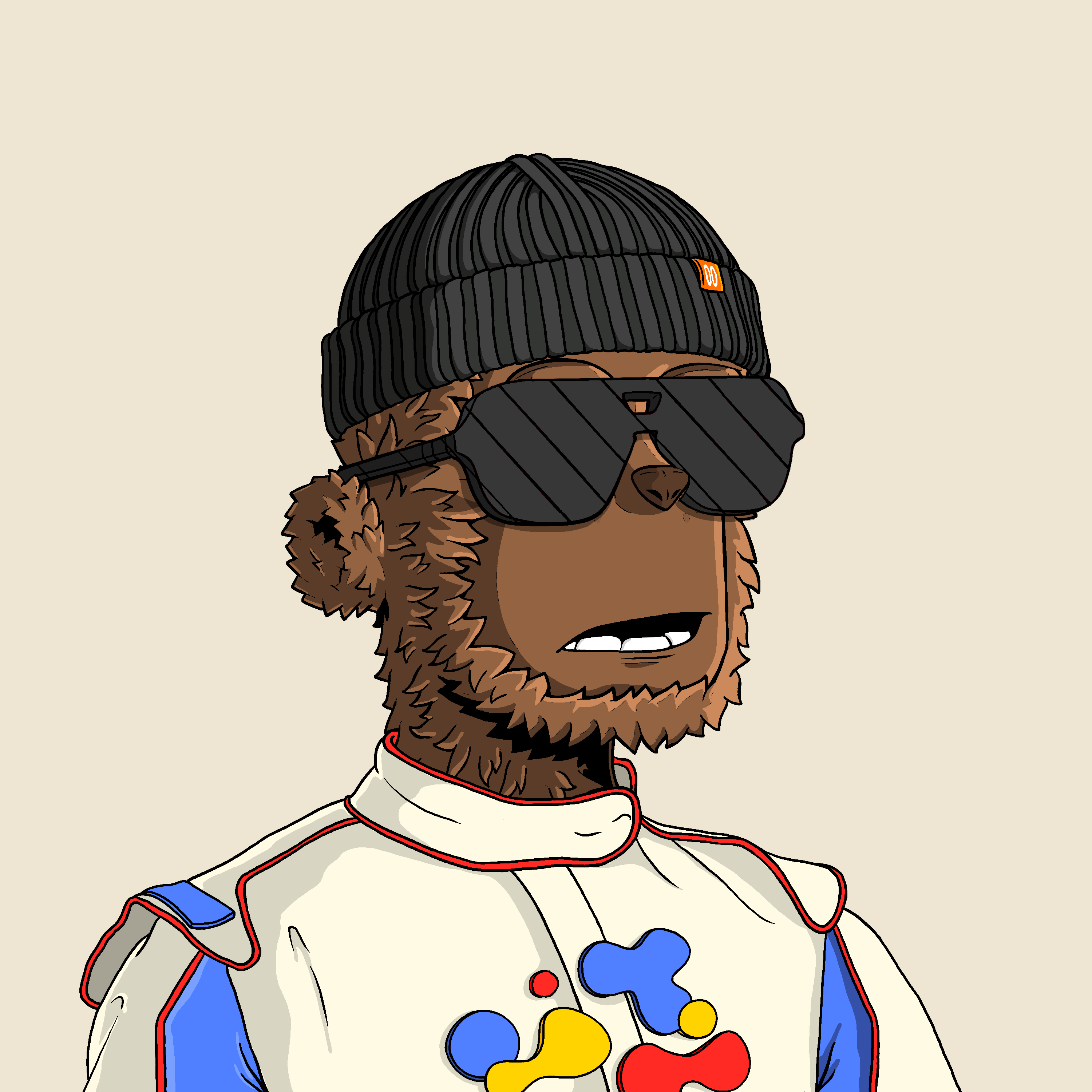
y00t #6678
In the draw9h ago
Live in the pool. Every pull can draw it, and while it sits it earns a share of every pull's fee. You can withdraw it at any time, this is the normal, healthy state of a position.

<Player2> #5947
Waiting to enter2m ago
Your deposit landed while pulls were still being settled. It waits out those draws, nobody gets to change the odds of a pull that is already paid for, and joins the pool automatically the moment the queue clears. Usually minutes.

<Player2> #4124
Being settled19h ago
Someone drew this position. The purchaser has 24 hours in which only they can choose an exit, and what you receive depends on their choice: if they keep or relist the NFT you are paid your backing minus the 0.25% settlement fee; if they take the SOL, the backing was the standing offer they accepted and your NFT comes back to you instead. Either way, everything the position earned, claimed or not, pays out to you in the same transaction. After the 24 hours you can finalise it yourself (a forced keep: NFT to them, backing minus 0.25% to you) without waiting on them; if nobody acts at all, settlement is forced automatically. Withdrawing is locked only while this chip shows, it is the one lock in the protocol.

<Player2> #5175
Closed3d ago
Settled and finished. The NFT was delivered or returned, every payout has been made, and the row moves to Past positions with its settlement transaction linked. Re-entering the pool is a fresh deposit.
Depositing
Earning
Where every pull's fee goes, split by split.
Every pull pays its markup into its pool, and it flows in a fixed order: the Crown and the protocol take theirs, and everything left is split equally across the pool's active positions:
One pull's fee, end to end
Split equally across active positionsthe depositors, the drawn one included
98%
The Crown holder's potthe deepest backing in the pool
1%
The protocolNFW's cut
1%
your share per pull = 98% of the fee / N active positions
Every active position earns the same slice per pull, whatever its backing, presence pays.
So where does deep backing pay? Not in the split, in being drawn rarely (your piece stays and keeps collecting), and in the Crown.
DO I HAVE TO CLAIM?
No. Claiming is optional, it simply moves earned fees to your wallet whenever you like. Unclaimed earnings are yours either way: if you withdraw, or if someone wins your position and takes the NFT or the SOL backing, everything your position earned is paid out to you automatically in the same transaction. Nothing is ever lost by not claiming.
What does that look like when your position is actually hit? A worked example: your NFT is backed at 1.00 SOL and has quietly earned 0.12 SOL in fees you never claimed. A pull draws it, and the purchaser chooses one of the four exits:
1: THEY KEEP THE NFT
You are paid your backing minus the 0.25% settlement fee, plus everything the position earned: 0.9975 + 0.12 = 1.1175 SOL lands in your wallet in the same transaction. You sold at your own price and kept every fee along the way.
2: THEY TAKE THE SOL
They take the standing bid, 90% of your backing, and your NFT comes straight back to your wallet, together with your 0.12 SOL of earnings, automatically. The backing was the price of keeping the piece; redeposit it whenever you like and it starts earning again.
3: THEY TAKE IT IN rNFW
The same 90% bid, paid in the reward token: 0.90 SOL of your backing goes into the rNFW curve instead of their wallet. Your side is identical to the SOL exit, your NFT comes back to you with your 0.12 SOL of earnings, in the same transaction.
4: THEY KEEP AND RELIST
They keep the NFT inside the pool and become its new depositor, paying in fresh backing of their own. You are paid out exactly as on a keep: 0.9975 + 0.12 = 1.1175 SOL, earnings included.
In all four, your earnings arrive without you pressing anything. Being drawn never costs you a fee you already earned, and a position that sat in the pool for weeks was collecting a share of every pull the whole time.
Depositing
The Crown
The reward for the deepest backing in the pool.
The single deepest-backed position in a pool holds that pool's Crown. It is the reward for committing the most capital to the game.
Accrues into a pot, and the pot is paid in full when the holder is displaced or exits.
Open to anyone, but not cheap: the Crown cannot flip for a lamport, and every displacement pays the outgoing holder their pot on the way out.
One subtlety: a freshly-deposited piece that lands while a draw is open starts staged, outside the draw, and cannot take the Crown until it activates. The Crown only ever rewards backing that is actually at risk.
Depositing
Withdrawing
Your assets leave whenever you say so.
Withdraw any position whenever you like: your NFT, your backing, and everything it earned come back in one transaction.
The only exceptions are moments when your piece is mid-settlement, someone drew it and is choosing their exit, or the few seconds while a draw lands. Nobody, including the team, can block a withdrawal.
The token
$NFW
The token of NFW.fun: one billion, listed at $16M, trading on one SOL pool whose liquidity is locked for good.
$NFW is the one token the whole game builds toward. One billion exist and no more can ever be minted: the mint authority is gone, there is no freeze authority, and the metadata is immutable. It lists at a $16M valuation, $0.016 per token, and trades against SOL on a single Raydium pool whose liquidity is locked with Burn & Earn, so it can never be pulled.
1,000,000,000 $NFW, 9 decimals, classic SPL token. Nothing can add to it.
The valuation the pool opens at on TGE day. Everything the season paid out converts at that reference.
A Raydium CPMM pool at 0.25%. The liquidity is locked for good; only the trading fees it earns can ever be claimed.
The token
Genesis season
The season paid in two stand-in tokens, rNFW for playing and gNFW for boxes. At TGE both convert into $NFW at fixed rates, on one vest.
Season Genesis earned $NFW through play as rNFW, the reward token ten percent of every pull's fee bought from a curve, and through the box round as gNFW, the token a pack settled into. Neither is $NFW itself; both are claims on it. The moment the swap opens, each converts at its published rate and vests on the same schedule.
Every rNFW held to TGE converts at 3.61, the Genesis airdrop built into the rate. Sold rNFW does not count.
The box token swaps one to one at the same moment, on the same vest. A Jeet burns for 6,300 $NFW through the same desk.
TGE
The swap opens. rNFW and gNFW convert into $NFW at their rates.
Half at once
50% of what you converted is in your wallet immediately.
Half over 30 days
The rest streams to you over the following 30 days. The program can only ever speed this up, never slow it down.
your $NFW = rNFW held × 3.61 + gNFW held × 1
50% at TGE, 50% streaming over 30 days
The rate and the vest are fixed on chain the moment the swap opens. After that the only instruction that exists makes the vest faster.
The desk holds every $NFW it can ever owe before it opens: 72,586,176 $NFW were placed in its vault on 7 September 2026, enough for all rNFW issued at 3.61, every gNFW minted, and all 5,555 Jeets at 6,300. The program checks that balance when the desk is created and the ceilings can never be raised, so nothing a holder converts can find the vault short.
The token
Tokenomics
One billion $NFW, seven lines, one calendar: every allocation scheduled, 100% emitted within 36 months, the locked lines in contracts nobody can cancel.
$NFW Tokenomics
1B $NFW total. Season Genesis distributes 10% of it, earned by playing and through the GachaPad round. No public sale.
- Genesis allocationEarned by playing and through the GachaPad round; 50% at TGE, the rest linear over 30 days. 72,586,176 $NFW sit in the swap desk's vault, the rest of the line stays with the protocol10%100MVerify vault
- Season 2Another way to earn; starts as Genesis ends: unlocked at day 30 into the Season 2 program, paid out as players earn it10%100MVerify lock
- Ecosystem & rewardsStreams as the seasons run: linear from month 4 to month 3650%500MVerify lock
- Liquidity, CEX/DEX & multichain1.05% of supply seeded the NFW/SOL pool at TGE, 10,500,000 $NFW against 1,600 SOL, the LP locked forever with Burn & Earn; the rest linear over 12 months15%150MVerify lock
- Team1 year lock, then linear over 24 months10%100MVerify lock
- Partners & projectsPartners, issuers and integrations; 1 year lock, then linear over 24 months5%50MVerify lock
Published 21 August 2026. Every allocation is scheduled; 100% of supply is emitted within 36 months.
Unlock schedule
Unlocked at TGE: 65M $NFW, 6.5% of supply, the Genesis half plus the liquidity that seeds the pair. Genesis is fully vested by day 30, Season 2 lands there, the team and partners wait a full year before their 24 months start, and Ecosystem streams from month 4 to month 36. One calendar, fully emitted: 100% of supply is unlocked within 3 years.
- Supply
- 1B $NFW
- TGE FDV
- $16M
- TGE price
- $0.016
- Unlocked at TGE
- 6.5% of supply
- Genesis vested
- day 30
- Fully emitted
- month 36
Every locked allocation is a Jupiter Lock contract on the $NFW mint rxczFZFvzksquCazjtv9vtEBYW7q4SwiqXkzBcw8NFW. Nobody can cancel a lock, only the receiving Squads vault can claim from it, and each stream vests by the minute once its cliff passes. The Genesis 10% is not in a lock: it is paid through the swap desk on the Genesis vest, from a vault the program alone controls. The liquidity line seeded the NFW/SOL pool on Raydium at TGE, and the LP tokens are locked forever: nobody, us included, can ever pull that liquidity out.
One year locked, then linear over 24 months, fully unlocked in September 2029. Claims land in the team's Squads vault.
The same schedule as the team: one year locked, then 24 months linear, into the partners' Squads vault.
Four months locked, then linear over 32 months, fully unlocked in month 36, into the ecosystem Squads vault.
Locked until the season starts, then it moves into the Season 2 program and reaches players only as they earn it.
The NFTs
Jeets
5,555 NFTs on the Fenix standard: each one is burnable for 6,300 $NFW, so a Jeet is never worth less than the tokens inside it.
The Jeets are the first collection on the Fenix Protocol, NFW's own NFT standard. A Fenix NFT looks and trades like any other, traits, rarity, a collection, but each one holds real underlying value: a fixed amount of $NFW that its holder can burn it for at any time after TGE. That gives every Jeet a floor nobody has to defend, because anyone can execute the claim. The Jeets were minted through GachaPad by nfw.fun, sealed, and reveal after the round.
Every Jeet exists on chain already. Unique traits and rarity, sealed at mint and revealed together.
Burn a Jeet and its $NFW is yours, paid through the same vesting desk as the season's tokens, any time after TGE.
5,555 × 6,300 $NFW, reserved for the burn claims. Nothing else can spend it.

Sealed
Minted as an unrevealed box. Traits and rarity are fixed on chain from the start, hidden until the reveal.
Revealed and tradable
Frozen while the round ran, then the collection thaws, reveals and trades freely with 3% royalties.
Burnable
Any time after TGE, burn a Jeet for its 6,300 $NFW. Hold it, trade it or burn it: the choice stays with the holder.
The Jeets that were pulled, in their holders' wallets, revealing after the round.
The Jeets nobody drew were not sold off. They sit in the treasury, unrevealed, saved as rewards for the seasons to come.
CAN THE CLAIM CHANGE?
No. 6,300 $NFW per Jeet is written into the claim itself, and the tokens behind it are reserved. A Jeet can trade above that on the market, never below it for long, because anyone can burn one and take the tokens.
WHAT HAPPENS TO A BURNED JEET?
It is gone: the NFT is destroyed, its $NFW is released to the burner through the vesting desk, and the collection's supply drops by one. The remaining Jeets keep exactly their own claims.
Accepted
Accepted collections
What the NFT pool admits, verified on chain.
These are the collections the NFTs pool accepts today, the same list the deposit screen offers. The address under each name is the on-chain verified collection the program checks at deposit: match it against your NFT's metadata if you want to verify beyond this page. Anything not on this list is refused by the program itself, whatever a website says.
Claynosaurz
Solana Monkey Business
Mad Lads
Galactic Geckos
DeGods

The Bullpen
Famous Fox Federation
SMB Gen3

Degenerate Ape Academy
Zero Monke Biz
y00ts

Jeets

Lil Chillers

BoDoggos
MidEvil

Dumpstr Bags
Kups by Raposa
Cets on Creck
Player 2
The Pond

Pythenians
Bulltoshi
Goats of Solana

Taiyo Robotics
Taiyo Infants & Incubators
Claynosaurz: Call of Saga

Okay Bears

Degenerate Drop Bears

Transdimensional Fox Federation

Boryoku Dragonz
Retardio Cousins
Smyths by Blocksmith Labs
Cyber Frogs

Sensei

Critters Cult
Stoned Ape Crew

Froganas
BASC v2
SolGods

Meerkat Millionaires Country Club

Mimany

Mindfolk

Rogues

The Catalina Whale Mixer

Pesky Penguins

Dead King Society

Dead King Society Nobles
Critters Quest
ABC
Quekz

Doge Capital

Thugbirdz
Admissions happen on-chain, one collection at a time, and this page tracks them. Zero Monke Biz minted in two verified groups; both addresses are admitted, so every ZMB is welcome.
Accepted
Accepted TCG
The graded-card vaults the TCG pool accepts.
The TCG pool accepts graded, vaulted trading cards from exactly three issuers. Each slab is an NFT whose physical card sits in the issuer's vault; the address under each name is the verified collection the program checks at deposit, the same rule as the NFT list above. A card from anywhere else is refused by the program itself.
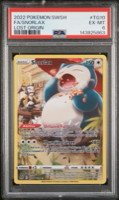
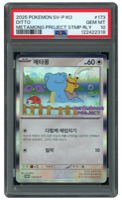
Collector Crypt vaults across two collections, its earlier standard and its current one, and both are admitted. New issuers arrive the same way NFT collections do: one on-chain admission at a time, tracked here.
Accepted
Token packs
The tokens the NFW pack accepts, and the minimum each takes.
The NFW pack is one on-chain pool built to hold many tokens at once. Anyone can put any of the tokens it accepts on the shelf and hold a position; a pull draws one position at market value, priced live from each token's deepest SOL pool. The address under each name is the mint the program checks at deposit, and the minimum next to it is the pack's floor for that token, refused by the program below it. Anything not on this list is refused by the program itself.
NFW
min 2,000

ANSEM
min 160

WIF
min 150

TOAD
min 6,100
JIMOTHY
min 6,500

USELESS
min 140

TROLL
min 650

BUTTCOIN
min 2,700

TRIPLET
min 3,700
CHILLGUY
min 2,300
FARTCOIN
min 180

NEET
min 1,100

JUP
min 130
CARDS
min 200
New tokens are admitted on chain one at a time by the pack's authority, and this page tracks them.
More
Referrals
Bring players, earn a cut of the protocol's take.
Connect X on your profile and your handle becomes a link: nfw.fun/r/yourhandle. Anyone who connects a wallet through it is credited to you, and you earn a share of what the protocol makes from their pulls.
The standard rate. Partner rates are set individually and are shown on your own profile.
the protocol's take, per settle:
  0.05% of backing  -> when they keep the NFT
  0.05% of backing  -> when they keep and relist
  2%    of backing  -> when they take the standing bid
The bid is where the money is. The protocol keeps 10% of backing when a purchaser takes the standing bid against 0.25% on the other two exits, so a referral is worth roughly forty times more when your referee cashes out than when they keep.
WHEN AM I PAID?
Once a month. Earnings accrue on your profile as they happen, but nothing is transferred automatically. After each month closes the figures are validated and paid to every participant in one run, so a balance showing on your profile mid-month is what you have earned, not what has been sent.
WHO COUNTS AS A REFERRAL?
Wallets that are new to the protocol. Someone who has already deposited, pulled or claimed cannot be credited to anyone, the link only works for a genuinely new wallet, and it binds once, permanently, to whoever referred them first. A later link does not overwrite an earlier one.
CAN I REFER MYSELF?
No. Your own wallet is refused, and so is any wallet linked to the same X account as yours. Referrals pay for bringing other people in.
WHAT IF MY REFEREE NEVER SETTLES?
You earn nothing on that pull. The referral share is a cut of the protocol's settlement revenue, so it exists only once a purchaser has chosen an exit, the fee the pool takes at purchase time is not part of the referral programme.
More
Fair questions
The questions a skeptic should ask, answered.
Is the draw actually random?
Yes. The randomness comes from an on-chain oracle and the selection runs in the program, the team, the site, and the puller all see it only after it is fixed.
Can the team take my NFT or my backing?
No. No admin action can move a depositor's assets or stop a withdrawal. The team can pause new deposits and new pulls; exits always work.
Are these rules just website rules?
No: every number on this page is enforced by the on-chain program. The site is a convenient window; a hand-built transaction plays by exactly the same rules.
What am I risking?
A pull can return a card worth less than you paid. A deposited NFT can be taken at its standing backing at any time. Nothing here is investment advice.